
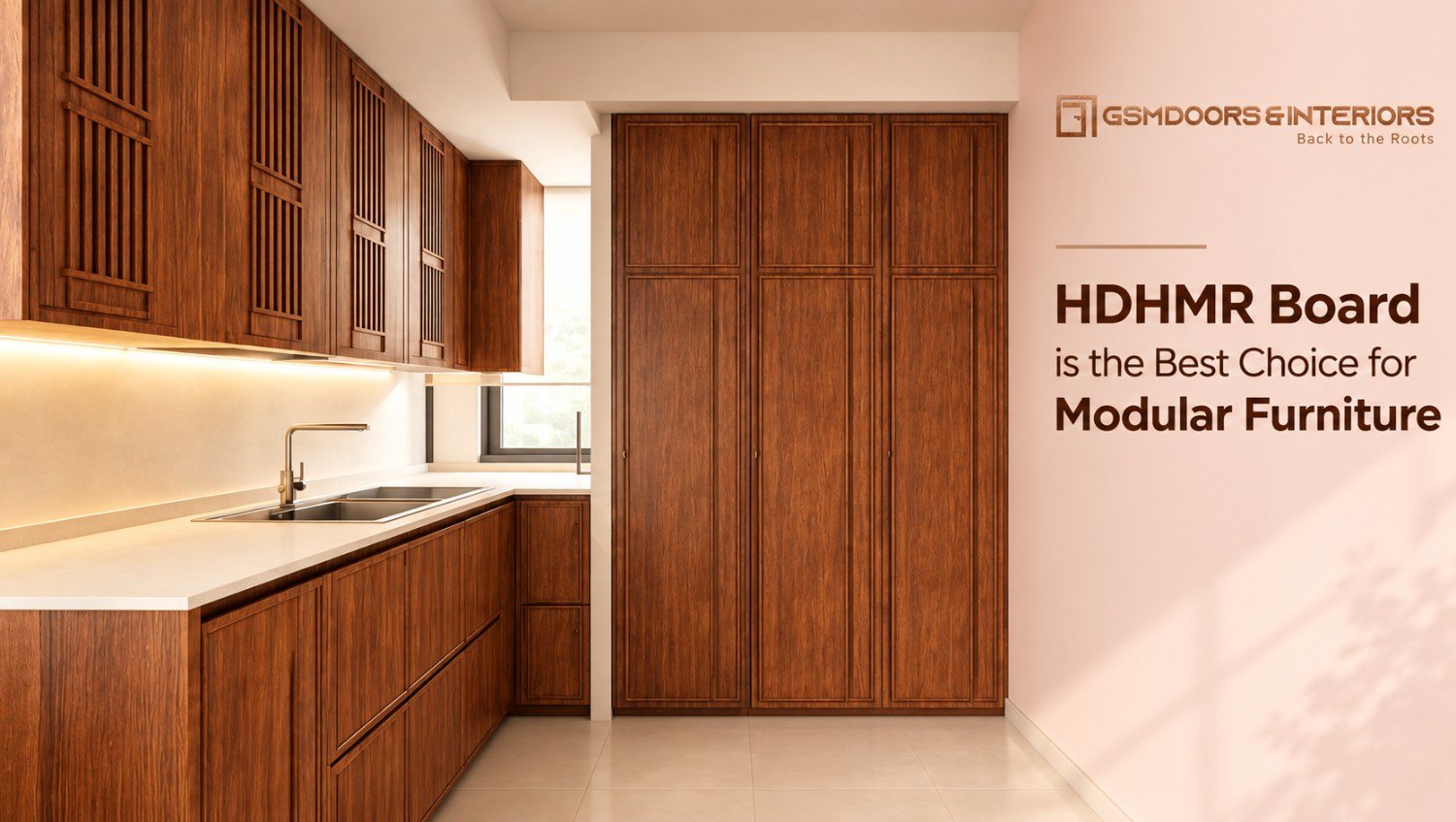
If you've ever walked into a furniture showroom and asked what material your new wardrobe or kitchen cabinet is made of, chances are you've heard the term HDHMR at some point. It's become one of the most talked-about materials in the modular furniture world, and honestly, once you understand why, it's easy to see what the fuss is about.
At GSM Doors, we work with HDHMR every single day, and we've seen firsthand how it's changed the way people think about doors, cabinets, and modular interiors. So let's talk about why this material has earned its reputation, and why it might be exactly what your next furniture project needs.
First, What exactly is HDHMR?
HDHMR stands for High-Density High Moisture Resistant board. It's essentially an upgraded version of standard MDF (Medium Density Fibreboard), made by compressing wood fibres at extremely high pressure and density. The result is a board that's stronger, denser, and far better equipped to handle everyday wear and tear than most conventional materials used in furniture-making.
Unlike plywood, which is made from layered wood sheets, HDHMR is manufactured as a single, uniform block. This gives it a smooth, consistent surface that's perfect for painting, laminating, or veneering — which is exactly why it's become the go-to choice for a HDHMR Door and other modular applications.
The Real Reasons HDHMR Wins Over Other Materials
1. It Actually Resists Moisture
Most kitchens and bathrooms in Indian homes deal with humidity, spills, and steam on a daily basis. Regular MDF or particle board tends to swell or warp when exposed to moisture over time. HDHMR, on the other hand, is engineered specifically to resist this. That's a big reason why it's become such a popular pick for kitchen shutters and bathroom cabinetry.
2. Strength Without the Bulk
Because of how densely the fibres are compressed, HDHMR boards can handle a lot more load and stress compared to standard boards of the same thickness. This means your wardrobe shelves won't sag, your cabinet doors won't warp, and your furniture holds its shape for years.
3. A Smoother Finish, Every Time
Here's something a lot of people don't realize until they've worked with it — HDHMR takes paint, laminate, and veneer beautifully. There are no visible layers or grain patterns interrupting the surface, so whatever finish you choose ends up looking clean and seamless. This is exactly why a HDHMR Designer Door looks so polished compared to doors made from other engineered boards.
4. Termite and Borer Resistant
Wood-boring insects are a real concern in Indian climates, and they can quietly destroy furniture over years without anyone noticing until it's too late. HDHMR's manufacturing process makes it naturally resistant to termites and borers, giving your furniture a longer, healthier life.
5. Ideal for Modern, Modular Designs
Modular furniture depends on precision — clean edges, consistent dimensions, and surfaces that respond well to CNC cutting and routing. HDHMR checks every one of these boxes, which is why designers and carpenters increasingly prefer it over plywood or particle board for contemporary interiors.
Where GSM Doors Comes In
At GSM Doors, we've built our reputation around getting the material right before anything else. Every HDHMR Door we manufacture goes through strict quality checks for density, moisture resistance, and finish consistency, because we know a door is only as good as the board it's built from.
If you're looking for something with a bit more character, our HDHMR Designer Door range brings together the strength of HDHMR with contemporary patterns, textures, and finishes — so you don't have to choose between durability and aesthetics. Whether it's for a kitchen, wardrobe, or a full modular interior setup, GSM Doors has options built to last.
Final Thoughts
Choosing the right material for modular furniture isn't just about how it looks on day one — it's about how it holds up five, ten years down the line. HDHMR brings together strength, moisture resistance, and a finish quality that's hard to match, which is exactly why it's become the preferred choice for modern homes and interiors.
If you're planning your next modular furniture project, it's worth having a proper conversation about materials before you finalize designs. And if you want boards and doors that are built to actually perform, GSM Doors is a good place to start that conversation.
FAQs
Q1. Is HDHMR better than plywood for furniture?
For most modular applications, yes — HDHMR offers a smoother finish and better moisture resistance, though plywood can still have an edge in certain heavy-load structural uses.
Q2. Can HDHMR boards be used in bathrooms and kitchens?
Yes, its high moisture resistance makes it a great fit for humid areas like kitchens and bathrooms.
Q3. How long does HDHMR furniture typically last?
With proper installation and care, HDHMR furniture can easily last 10-15 years or more.
Q4. Is HDHMR more expensive than MDF?
It's usually priced slightly higher than standard MDF, but the added durability and moisture resistance make it worth the difference.
Q5. Does GSM Doors customize HDHMR doors in different designs?
Yes, GSM Doors offers a range of HDHMR Designer Door options in various finishes, textures, and patterns to match different interior styles.