
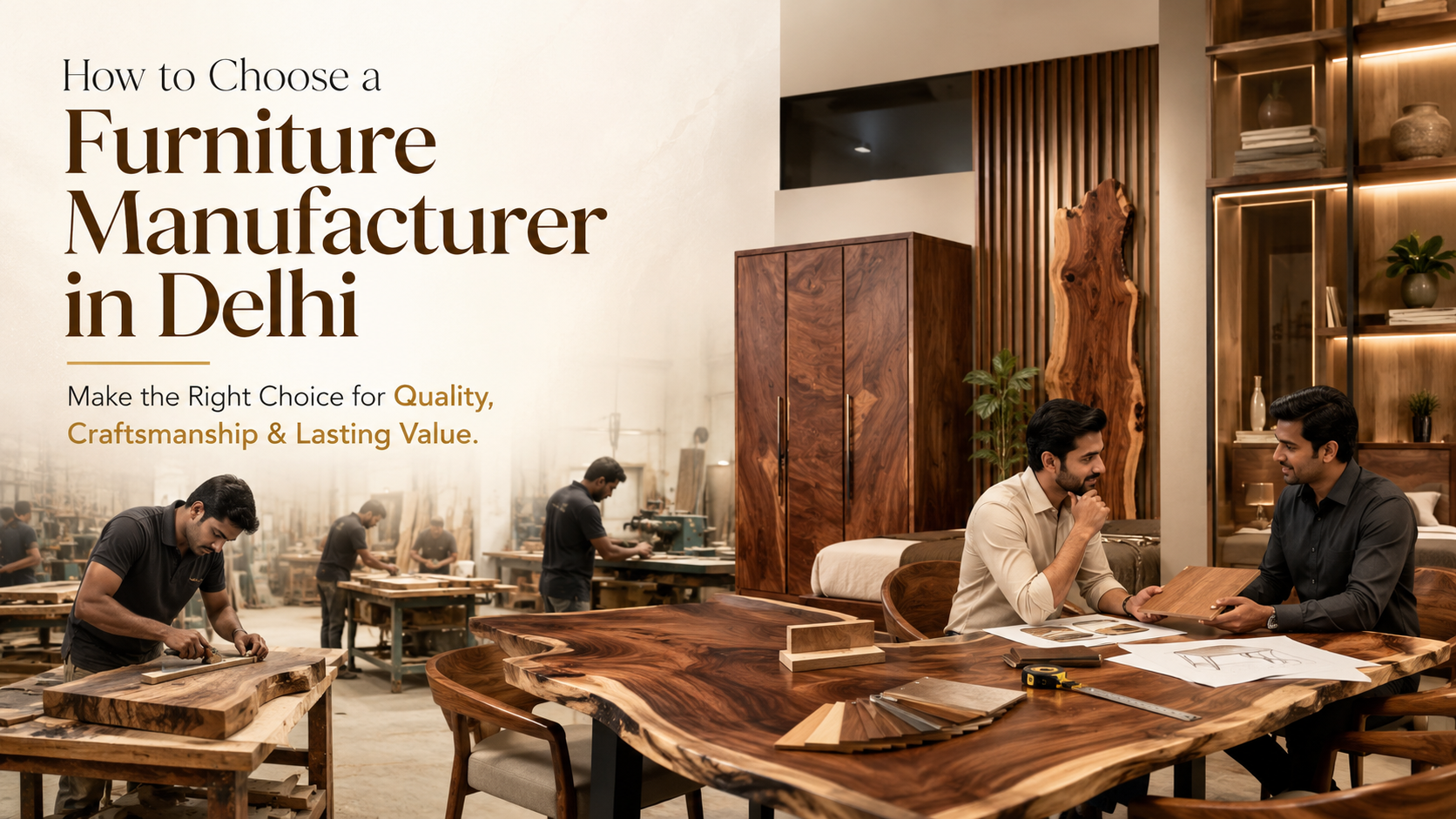
Delhi's furniture market is massive, and that's exactly what makes choosing the right partner so confusing. Walk down Kirti Nagar or browse online for a few minutes, and you'll find hundreds of workshops, showrooms, and "manufacturers" all claiming to offer the best quality at the best price. But not every unit that calls itself a manufacturer actually owns a factory, sources genuine timber, or stands behind its work once the invoice is paid.
If you're building a home, renovating an office, or furnishing a hotel, the manufacturer you pick will decide how your furniture looks in year one and how it holds up in year ten. This guide walks you through what actually separates a dependable furniture manufacturer from the rest, so you can make a confident decision instead of a rushed one.
Among the names worth knowing in this space is GSM Doors, a Delhi NCR-based manufacturer that has built its reputation on solid teak wood craftsmanship, custom design, and long-term client relationships rather than one-off sales. We'll refer to their approach throughout this guide as a benchmark for what good practice in this industry looks like.
Why Choosing the Right Furniture Manufacturers in Delhi Matters
Furniture is a long-term investment. A dining table, a wardrobe, or a set of doors isn't something you replace every year — it's meant to serve your family or your business for decades. That's why the search for reliable furniture manufacturers in Delhi should never be based on price alone.
A good manufacturer brings three things to the table: consistent material quality, skilled craftsmanship, and accountability after installation. A weak one brings unpredictable timelines, mismatched finishes, and furniture that starts creaking within a year. The difference usually comes down to how the manufacturer sources wood, trains its carpenters, and manages its production process — all things worth investigating before you sign a work order.
What Makes Teak Wood the Best Choice for Furniture?
If you ask any experienced carpenter or interior designer in Delhi what wood they'd choose for furniture that needs to last, most will point to teak. It isn't a trend — it's a material that has proven itself over generations, and here's why it continues to dominate premium furniture manufacturing.
Natural durability. Teak contains natural oils that make it resistant to moisture, decay, and warping. Unlike softer woods that swell or crack in humid weather, teak holds its shape through Delhi's hot summers and the monsoon season alike.
Termite and borer resistance. One of the biggest fears with wooden furniture in India is termite damage. Teak's natural resin acts as a built-in deterrent, significantly reducing the risk compared to plywood or lower-grade hardwoods.
Low maintenance. Teak doesn't demand constant polishing or chemical treatment to stay in good condition. A light wipe-down and occasional oiling are usually enough to keep it looking new for years.
Aesthetic value that improves with age. Teak develops a rich, warm patina over time instead of looking worn out. Furniture made from it tends to look better, not worse, as the years go by.
Eco-friendly sourcing potential. When sourced from responsibly managed plantations rather than old-growth forests, teak is a genuinely sustainable choice — something increasingly important to homeowners who care about their environmental footprint.
This is precisely why manufacturers like GSM Doors build their entire product range — from doors to wardrobes to outdoor furniture — around solid teak wood rather than composite or engineered alternatives. When you're comparing manufacturers, always ask what wood grade they use and where it's sourced from. The answer tells you almost everything about the furniture's long-term performance.
What Should You Look for in a Wooden Door Manufacturer?
Doors deserve special attention because they take more daily abuse than almost any other piece of furniture in your home — constant opening, closing, weather exposure, and, in many cases, security expectations. Choosing among the many wooden door dealers in Delhi NCR can feel overwhelming, so here's a practical checklist.
1. Ask about the wood species and grade. Not all "wooden doors" are equal. Some dealers use veneered plywood and market it as solid wood. A trustworthy manufacturer will be transparent about whether the door is solid teak, engineered wood, or a veneer finish.
2. Check for customization capability. Standard sizes rarely fit older Delhi homes or custom-designed spaces perfectly. Look for a manufacturer that offers tailor-made dimensions, carving patterns, and finishes rather than a fixed catalogue only.
3. Look at fire and weather resistance. Especially for external doors or ground-floor entries, resistance to weather and fire safety standards matters. Ask for material specifications, not just visual samples.
4. Evaluate the finishing and hardware options. A door is only as good as its fittings. Confirm what hinges, locks, and handles come standard, and whether they're rated for daily heavy use.
5. Review after-sales support. Doors sometimes need realignment or minor servicing after installation, particularly during seasonal humidity changes. A manufacturer offering post-installation support signals confidence in their own product — something GSM Doors, for instance, positions as a core part of its service rather than an optional add-on.
6. Visit the factory or workshop if possible. Photos and showroom samples only tell part of the story. Seeing the actual manufacturing unit gives you a sense of quality control, machinery, and craftsmanship standards.
What Are the Benefits of Eco-Friendly Furniture?
Sustainability isn't just a marketing buzzword anymore — it's becoming a genuine factor in how Delhi homeowners and businesses choose their furniture. Eco-friendly furniture manufacturing brings benefits that go beyond environmental responsibility.
Healthier indoor air quality. Furniture made without harsh chemical treatments and synthetic adhesives releases fewer volatile organic compounds (VOCs) into your home, which matters for families with children or anyone sensitive to indoor pollutants.
Longer product lifespan. Sustainably sourced hardwoods like plantation teak are typically denser and more durable than fast-grown alternatives, meaning the furniture simply lasts longer before needing replacement.
Reduced environmental impact. Manufacturers who use farmed or plantation wood and replant trees help reduce pressure on natural forests. Water recycling and minimal wood wastage during production further lower the environmental cost of every piece made.
Biodegradability. Furniture built from natural wood, rather than plastic composites or synthetic boards, breaks down naturally at the end of its life instead of sitting in a landfill indefinitely.
Support for ethical employment. Many eco-conscious manufacturers also invest in fair employment practices for the carpenters and craftsmen who build the furniture, creating a more sustainable business model overall.
When you're evaluating furniture manufacturers in Delhi, it's worth asking directly about their sourcing policy. Do they use plantation wood? Do they replant? Do they minimize water and material wastage during production? These questions separate manufacturers who genuinely practice sustainability from those who simply use the word in their marketing.
How Long Does Custom Furniture Manufacturing Take?
One of the most common questions homeowners and designers ask is how long custom furniture actually takes to produce. The honest answer is: it depends on complexity, but here's a realistic breakdown.
Design and consultation (3–7 days). This stage involves finalizing dimensions, wood type, finish, and design details. Manufacturers offering strong initial guidance — helping you choose the right material and design for your space — tend to save significant time later by avoiding revisions.
Material sourcing and preparation (1–2 weeks). Once the design is locked, the wood needs to be selected, seasoned if necessary, and prepared for cutting. This step matters more for solid wood furniture than for engineered alternatives, since properly seasoned wood resists warping later.
Manufacturing and craftsmanship (2–4 weeks). This is where cutting, joinery, carving, and assembly happen. Simple items like a single wardrobe or a standard door may take less time, while intricate carved doors, kitchen furniture, or large sets can take longer.
Finishing and quality checks (3–5 days). Polishing, sealing, and hardware fitting happen at this stage, along with quality inspection before dispatch.
Delivery and installation (2–5 days, depending on location). For clients across Delhi NCR, this is usually quick, but larger commercial orders — like full kitchen furniture manufacturing for a Delhi-based restaurant or office — may require phased delivery and installation.
In total, most custom furniture projects take anywhere from 3 to 8 weeks from initial consultation to final installation, depending on scale and design complexity. Manufacturers with an in-house factory rather than an outsourced production chain — like GSM Doors' own facility — typically offer more predictable timelines because they control every stage of the process directly.
Making Your Final Decision
Choosing among furniture manufacturers in Delhi ultimately comes down to three questions: Do they use quality, verifiable materials? Do they offer real customization and clear communication throughout the process? And will they still support you after the furniture is installed?
Whether you're searching for the best wooden furniture manufacturers in Delhi for your living room, comparing wooden door dealers in Delhi NCR for your home's entrance, exploring kitchen furniture manufacturers in Delhi for a full modular setup, or looking into outdoor wooden furniture in Delhi for your terrace or garden, the fundamentals stay the same — ask about the wood, ask about the process, and ask what happens after installation.
Manufacturers like GSM Doors have built their model around exactly these priorities: solid teak wood construction, complete customization, eco-friendly sourcing, and long-term client relationships instead of transactional sales. Whatever manufacturer you eventually choose, using these same standards as your checklist will help ensure your furniture is not just beautiful on day one, but reliable for decades to come.